
XL Bully
What XL bully owners in England and Wales need to know about exemption, the third-party insurance that is legally required, and the cost of keeping one.
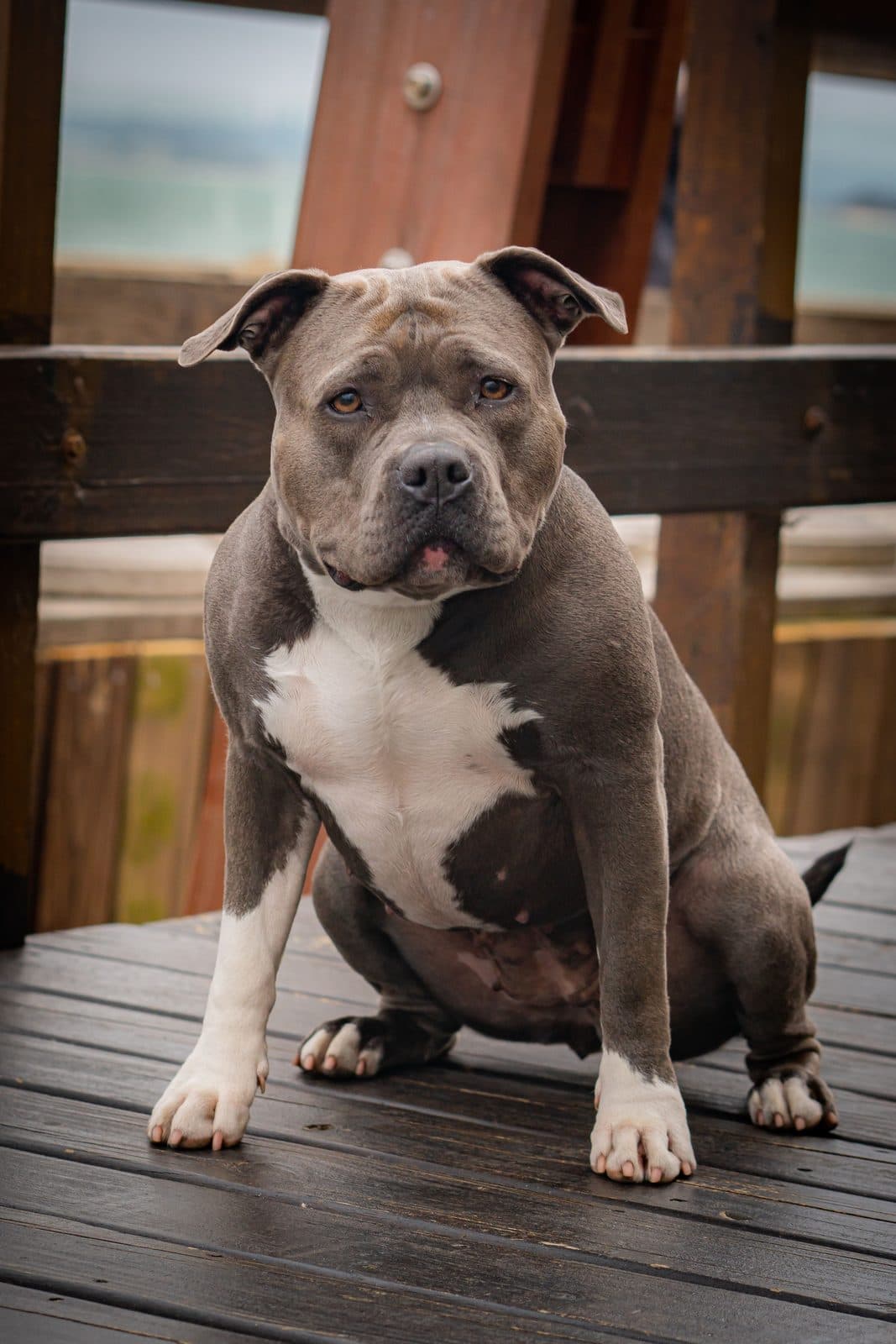
What a XL Bully costs to own
Third-party liability insurance is a legal requirement here, not a choice, and mainstream cover is hard to find.
Insurance
A Certificate of Exemption requires continuous third-party public liability cover, and losing it puts the exemption and therefore the dog at risk. That is a separate product from ordinary pet insurance, usually arranged through specialist providers or welfare organisation schemes rather than comparison sites. Many mainstream insurers will not quote for the type at all, so most owners hold both policies.
What insurers are pricing for
These are risks the breed is predisposed to, not things your dog will get.
- Hip and elbow dysplasia
- Large, heavy dogs carrying a lot of muscle. Joint problems are common and expensive.
- Skin conditions
- Heavy skin and, in some lines, folds. Recurrent dermatitis is frequent.
- Eye conditions
- Cherry eye and entropion appear often enough to be worth asking about.
- Heat sensitivity
- Lines with a shortened muzzle cope poorly with warm weather and exertion.
Grooming
Short coat, easy. Any folds need cleaning and drying, as with other heavy-set breeds.
Size, food and kit
Large and heavy. Food, bedding and equipment all cost more, and boarding is harder to arrange because many kennels will not take an exempted dog.
The one people underestimate
Letting the liability cover lapse. It is the one insurance policy here with legal consequences attached, and a gap in it is a much bigger problem than a gap in a health policy.
Getting a real number
We deliberately do not print premiums here. What you pay depends on your postcode, your dog’s age, the cover level and the month you ask, so any figure on a page like this is wrong for most people and out of date within a year. Get quotes from a few providers instead, and compare what the policies actually cover rather than the headline price.
"The dog you have is the dog in front of you, not the one in the headlines."
— Anonymous
Read this first
The XL bully is a banned type in England and Wales. Since February 2024 it has been illegal to breed, sell, rehome, abandon or give away an XL bully, and illegal to have one in public without a lead and muzzle. Owning one is lawful only if it holds a Certificate of Exemption.
This page is written for people who already own an exempted dog, or who are trying to work out what their responsibilities are. It is not a page about acquiring one, because you cannot lawfully acquire one.
Scotland introduced its own rules shortly afterwards. Northern Ireland has separate legislation again. If you are outside England and Wales, check your own nation's guidance rather than assume this applies.
For the exemption process itself, see our guide on registering an XL bully.
The insurance is not optional
This is the part owners most often get wrong. A Certificate of Exemption requires the dog to be covered by third-party public liability insurance, and that cover must be kept in force continuously. Letting it lapse puts the exemption at risk, which puts the dog at risk.
This is a different product from ordinary pet insurance. It covers injury or damage the dog causes to other people, not vet bills for the dog itself. In practice most exempted owners hold both: the liability cover because the law requires it, and a normal policy for the dog's own health.
Cover of this type is usually arranged through specialist providers or through membership schemes such as those run by dog welfare organisations, rather than through mainstream comparison sites. Not every mainstream insurer will quote at all.
The other legal conditions
An exempted dog must be neutered, microchipped, kept in secure conditions, and muzzled and leashed in every public place. The certificate must be produced on request. These are conditions of the exemption rather than advice.
What they are like
Setting the law aside, the dogs themselves are large, powerful, people-oriented and typically affectionate with their families. They are strong enough that handling matters: a dog of this size and build pulling on a lead is a physical problem as well as a training one, and equipment needs to be up to the job.
Muzzle training deserves proper time. A dog that has been conditioned to a well-fitted basket muzzle is comfortable in it, and one that has had it strapped on is not. Ours is a guide to doing it kindly.
Health and cost
Large, heavy-set dogs, so the usual big-breed considerations apply: hip and elbow problems, and higher costs simply because doses and surgical time scale with body weight.
The breed type also carries the risks that come with heavy muscling and, in some lines, a shortened muzzle: skin problems, joint strain and heat sensitivity. Cherry eye and entropion appear frequently enough to be worth asking about.
Food, bedding and equipment all cost more at this size, and boarding is harder to arrange, since many kennels will not take an exempted dog at all.