
XL Bully Rules in the UK: What Exempted Owners Must Do in 2026
You can no longer register an XL bully. The rules for exempted dogs in England and Wales as of September 2026: the insurance requirement has gone, a new child supervision rule starts on 1 November 2026, and what happens if you move or the owner dies. Scotland and Northern Ireland covered too.
Updated 28 September 2026
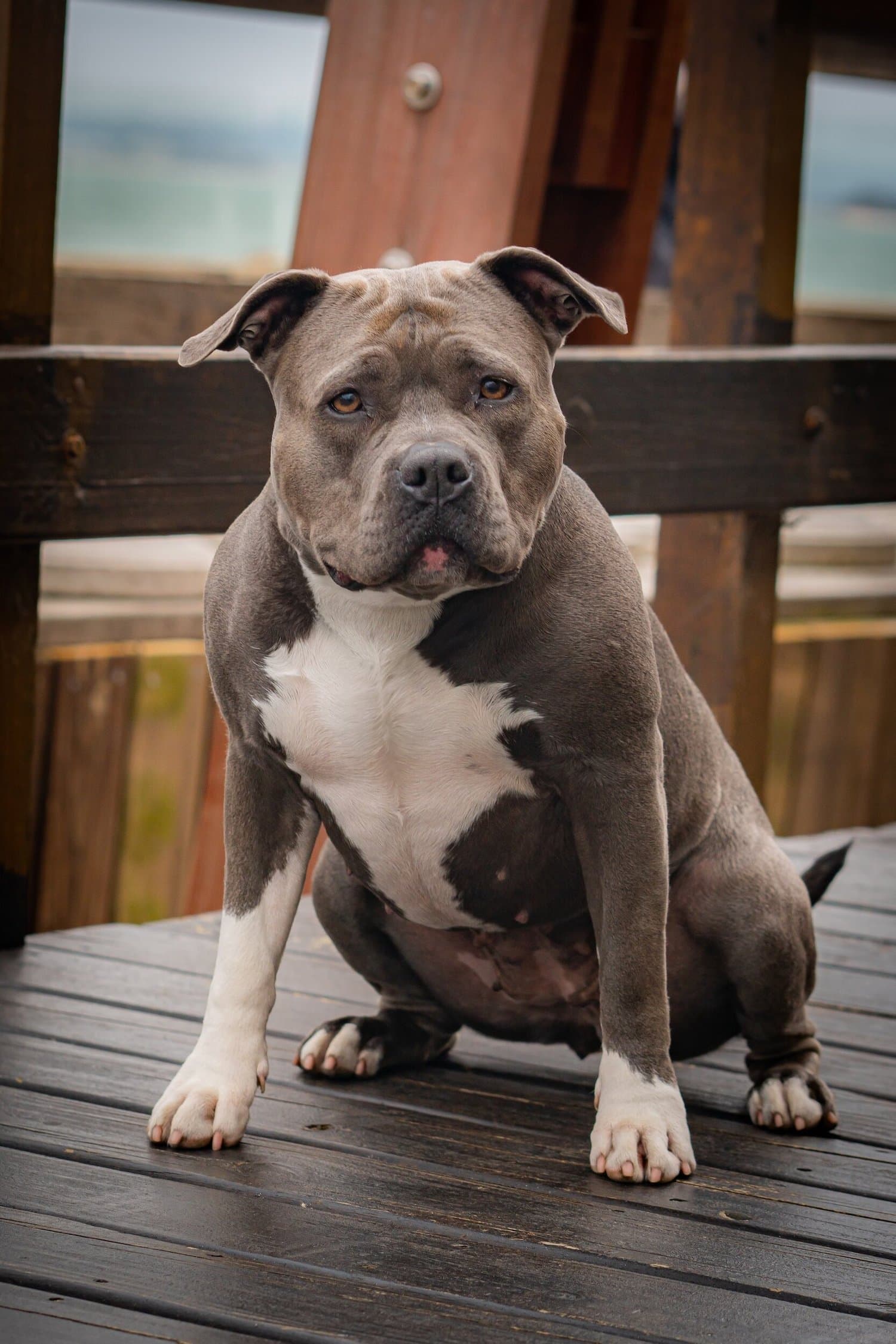
The window to register an XL bully closed a long time ago. In England and Wales, applications for a Certificate of Exemption closed on 31 January 2024, and since 1 February 2024 it has been a criminal offence to own an XL bully without one. What matters now is keeping to the conditions for the rest of your dog's life, because breaking them can cost you the exemption and the dog.
The rules have changed twice in 2026. The insurance requirement ended on 1 July 2026, and a new rule on children starts on 1 November 2026. This guide covers the rules as they stand at the end of September 2026. Our XL bully breed page covers the breed itself.
If Your Dog Has No Certificate
It is illegal to keep an XL bully without a Certificate of Exemption, and new exemptions can only be granted by a court. The government's advice is to contact your local police force.
Having a banned dog without an exemption can lead to an unlimited fine, up to six months in prison, or both, and the dog being destroyed. It is up to the owner to prove a dog is not a banned type. If a court decides the dog is not a danger to the public, it can make an order that allows you to apply for an exemption.
Whether a dog is an XL bully depends on what it looks like, not its pedigree or name. The government's official definition sets out the physical features, starting with height at the withers: from 51cm (20 inches) for adult males and 48cm (19 inches) for adult females.
The Rules for Exempted Dogs in England and Wales
For the life of the dog, you must:
- keep the dog at the certificate holder's address. It can stay somewhere else for up to 30 days in any 12-month period.
- tell Defra if you move permanently. Short stays within the 30 days don't count.
- tell Defra if the dog dies or leaves the country.
- muzzle the dog in public. Defra recommends a muzzle that lets the dog pant, breathe and drink.
- keep the dog on a lead in public, held securely by someone aged at least 16.
- keep the dog somewhere secure so it cannot escape.
- keep the dog neutered. Every deadline for neutering and sending proof to Defra has passed.
If a police officer or authorised council officer asks, you must let them scan the dog's microchip, and show them the certificate within 5 days.
If you break these conditions, the dog is no longer exempt. The police can take it and you could be prosecuted.
A basket muzzle the dog is happy to wear makes the public rules much easier to live with. Our guide to muzzle training takes you through it step by step.
Missed the neutering deadline?
If your dog wasn't neutered in time and Defra didn't receive the evidence, your certificate is not valid. Defra's advice is to contact your local police force, keep following all the other conditions, and still get your dog neutered.
New From 1 November 2026: Children Under 12
From 1 November 2026, you must not leave a child under 12 in close contact with an XL bully in a private place, such as your home or garden, unless an adult over 18 is supervising. The adult doesn't have to be the certificate holder. It applies to all banned breeds, and it becomes a condition of every Certificate of Exemption, so breaking it puts the exemption at risk.
Defra's guidance on keeping children safe around banned breed dogs is specific about what counts:
- Supervision means an adult in the room, watching and able to step in and separate the child and dog straight away. Cameras, baby monitors and video doorbells don't count.
- Plan for the gaps. Cooking, answering the door, going to the toilet, taking a call or seeing to another child are all times when you can't supervise.
- Separate them properly at those times: closed doors, secure stair gates, different floors, or a crate or pen the dog is already happy in. A child mustn't be able to reach through or over a barrier to touch the dog.
- Gardens count. Use the garden at different times, or fence off separate areas.
The guidance also says to give the dog space when it is eating, resting, holding a toy, unwell, or trying to move away.
Insurance Is No Longer Required
Until 30 June 2026, every exempted XL bully in England and Wales had to be covered by third-party public liability insurance. The government has now removed that condition. The Dangerous Dogs (Exemption Schemes) (England and Wales) (Amendment) Order 2026 took it out from 1 July 2026. Dogs Trust, which offered cover for banned breeds, stopped issuing and renewing those policies after 30 June 2026.
You can still choose to insure your dog, and ordinary pet insurance for vet bills is a separate question. Our pet insurance guide compares UK providers.
Moving House, Illness and Death
Moving. You can move, but you must tell Defra about a permanent change of address. Email the Index of Exempted Dogs at dogsindex@defra.gov.uk. The same address handles replacement certificates, which Defra only issues if you lose yours or change your name or address.
Selling or rehoming. It is illegal to sell, give away, rehome or transfer an XL bully. Rescues are told not to rehome them, and it is illegal to abandon one or let it stray.
If the owner dies or becomes seriously ill. This is the only way a dog can legally pass to someone else, and it goes through the courts. Under the Dangerous Dogs Exemption Schemes (England and Wales) Order 2015, a person can apply to their local magistrates' court to take over as the person in charge. The steps are:
- Give your details to the police in the area where you live, at least two weeks before applying.
- Apply in writing within six weeks of the death, or of the doctor's letter confirming serious illness, with the death certificate or the doctor's letter as evidence. The court can extend this for a good reason.
- Serve a copy of the application on the police.
While the application is pending, the dog can live with the applicant, who must follow all the exemption conditions. The court will only agree if it is satisfied the dog is not a danger to the public, looking at the dog's temperament and past behaviour and whether the applicant is a fit and proper person. Missing the six-week deadline ends the dog's exemption.
If you own an exempted dog, it is worth talking to the person you would want to take it on now, so they know the deadline exists.
If the dog dies, tell Defra.
Scotland
Scotland banned XL bullies separately, with its own exemption scheme run by the Scottish Government. Applications have closed and new exemptions can only come from a court. The daily conditions match England and Wales: same address, a 30-day limit on stays elsewhere (within Scotland), muzzle and lead in public with a handler over 16, and secure conditions. The penalty for breaking the rules is up to £5,000, up to six months in prison, or both.
Scotland has also dropped the insurance requirement. From 1 November 2026, Scotland has its own children rule: an adult aged 16 or over must be present whenever a child under 12 is with the dog in a private place. Contact the Scottish Government at xlbullydogenquiries@gov.scot about changes. See mygov.scot for the full rules.
Northern Ireland
Northern Ireland brought in its own rules later. It has been an offence to own an XL bully without an exemption certificate since 1 January 2025, and applications closed on 31 December 2024. The conditions mirror the rest of the UK, but local councils run the scheme there, so you report moves and deaths to your council. Insurance was required up to 30 June 2026, and the children rule applies from 1 November 2026.
Northern Ireland also requires every dog to be licensed. An XL bully must hold a valid licence for its exemption certificate to be valid. The licence costs £12.50 a year for a banned breed, with no concessions. See nidirect for details.
Sources
- GOV.UK: ban on XL Bully dogs (last updated 16 September 2026) and banned dogs
- Defra: keeping children safe around banned breed dogs in the home
- The Dangerous Dogs (Exemption Schemes) (England and Wales) (Amendment) Order 2026
- The Dangerous Dogs Exemption Schemes (England and Wales) Order 2015, Part 3
- GOV.UK: official definition of an XL Bully dog
- mygov.scot: XL Bully dogs in Scotland
- nidirect: XL Bully dogs
Common questions
Can I still register my XL bully?
No. Applications for a Certificate of Exemption in England and Wales closed on 31 January 2024. New exemptions can now only be granted by a court. If you have an XL bully without a certificate, the government's advice is to contact your local police force.
Do I still need third-party insurance for my XL bully?
No. From 1 July 2026, owners of XL bullies and other banned breeds in England and Wales no longer need third-party public liability insurance as a condition of their exemption. Scotland and Northern Ireland have dropped the requirement too.
What is the new XL bully rule about children?
From 1 November 2026, you must not leave a child under 12 in close contact with an XL bully in a private place, such as a home or garden, unless an adult is supervising. In England and Wales the adult must be over 18. It becomes a condition of every Certificate of Exemption, so breaking it puts the exemption at risk.
What happens to an XL bully if the owner dies?
Nobody can take the dog on informally. In England and Wales, someone can apply to a magistrates' court to take over as the person in charge, but only if the certificate holder has died or is seriously ill. They must give the police details at least two weeks before applying, and apply within six weeks of the death or the medical letter.
Can I move house with an exempted XL bully?
Yes, but you must tell Defra about a permanent change of address. The dog must live at the certificate holder's address, and can only stay somewhere else for up to 30 days in any 12-month period.
Can I give my XL bully to a rescue?
No. It is illegal to sell, give away, rehome or transfer ownership of an XL bully, and rescues are told not to rehome them. The only legal route to a new keeper is the court process for when the owner has died or is seriously ill.
Read next
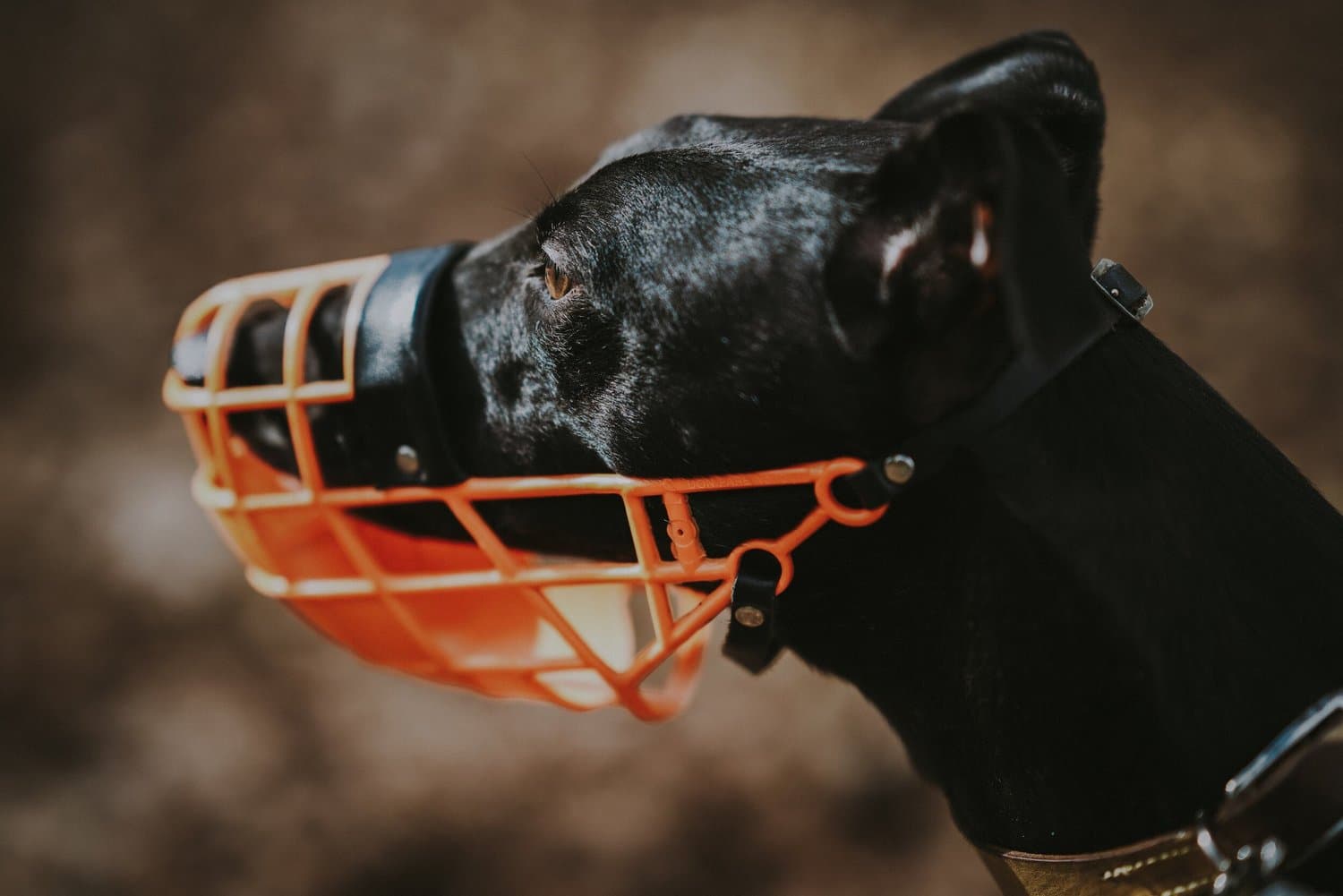
Guide to Muzzle Training for Dogs in the UK
Explore our step-by-step guide to positive muzzle training for dogs. Learn how to select the right muzzle, create positive associations, and safely introduce your dog to a muzzle. Understand the benefits, debunk myths, and discover practical tips.
UK Dog Walking Laws: The Rules Every Dog Walker Should Know
The UK laws that apply every time you walk your dog: collar tags, microchips, dangerously out of control, the tougher 2026 livestock worrying rules, lead laws on access land, council PSPOs and fouling fines. Scotland covered too.
Choosing a Dog Lead in the UK: Types, Lengths, Materials and the Rules
Which dog lead to use and when: fixed, double-ended, long line, slip, retractable, bungee and hands-free leads compared, the best materials for wet UK walks, and the UK rules on collar tags and council lead-length limits.