
Dry Eye in Dogs (KCS): Symptoms, Treatment and What It Really Costs
Dry eye in dogs rarely looks dry. It looks gunky. Here is how to spot keratoconjunctivitis sicca early, what the vet will do, what treatment costs in the UK, and the one thing you must never put in the eye.
Updated 30 September 2026
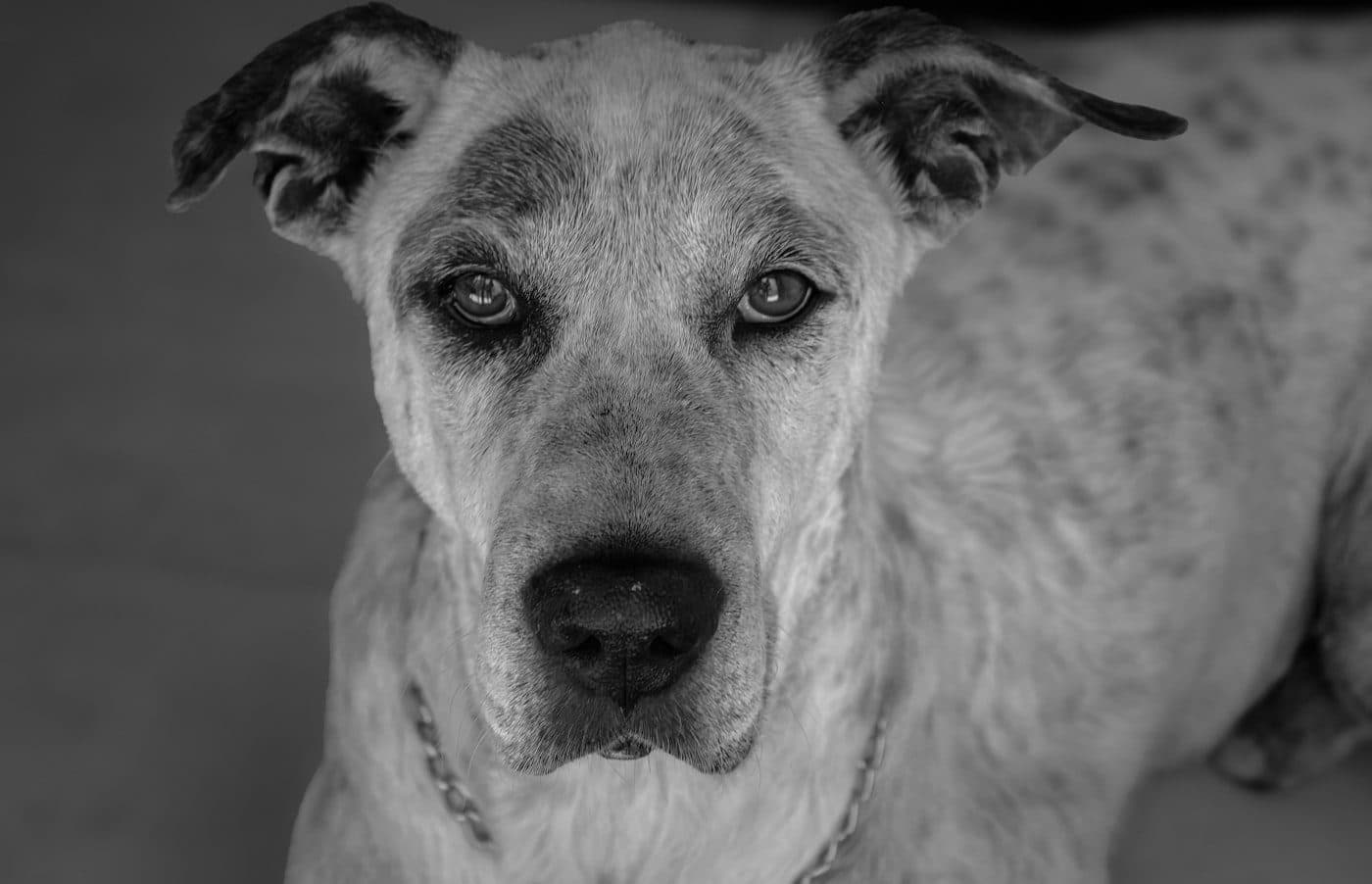
Dry eye is one of the most commonly missed conditions in dogs, and the reason is right there in the name. It almost never looks dry.
If you are not yet sure this is what you are dealing with, start with what your dog's eye discharge is telling you, which covers every cause rather than just this one.
What owners actually see is gunk. Thick, sticky, yellowish discharge in the corner of the eye that they wipe away every morning and that has come back by teatime. It gets treated at home as a bit of sleep in the eye for weeks or months, and by the time anyone puts a name to it the cornea has already taken damage that does not come back.
This is what the condition is, how to catch it early, and what happens next.
If your dog has been eating Years fresh meals, read our report on the Years dog food recall first. Years withdrew its Signature fresh meals on 17 August 2026 following reports of sudden dry eye in both eyes at once. Its investigation, published on 24 September, found no contamination in the food. The cause of these cases is still being studied by BrAVO, the British Association of Veterinary Ophthalmologists, which says that not all affected dogs were fed the same diet.
What Dry Eye Actually Is
The proper name is keratoconjunctivitis sicca, shortened to KCS by every vet you will ever meet.
Tears are not just water. A healthy tear film has three layers: a thin oily layer on the outside that stops it evaporating, a thick watery layer in the middle, and a mucus layer underneath that sticks the whole thing to the eye. KCS is a failure of the watery middle layer.
That matters more than it sounds, because the cornea has no blood supply of its own. It is transparent, and blood vessels running through it would ruin that. So it takes its oxygen and nutrients directly from the tear film sitting on top of it. Tears also carry antibacterial proteins and flush out dust and grit.
Take the watery layer away and three things happen at once. The cornea is starved and becomes inflamed. Debris and bacteria stay put instead of being washed off. And the mucus layer, now unbalanced, is left as a stringy paste on the surface.
That last one is why dry eye looks wet.
The Symptoms, In The Order Owners Usually Notice Them
| What you see | What is happening |
|---|---|
| Thick sticky discharge that returns within hours of wiping | Mucus with no watery layer to wash it away |
| Redness in the white of the eye and the inner eyelids | Inflammation of an unprotected surface |
| Blinking a lot, squinting, or holding an eye partly shut | Pain |
| Rubbing the face on carpet, sofas or your leg | Irritation, and a fast route to a scratched cornea |
| A dull or lacklustre look where the eye used to be glossy | The smooth tear film has gone |
| Cloudiness, or a bluish haze | Corneal oedema, which needs a vet promptly |
| A brown or black film creeping in from the edges | Pigment. This stage is permanent |
| Reluctance in bright light, or a generally flat mood | Ongoing discomfort |
The single most useful question to ask yourself is does the discharge come back. Ordinary conjunctivitis clears up. A gunky eye that reappears every day for a fortnight is not a grooming problem.
What Causes It
Immune mediated destruction of the tear glands is by far the most common cause. The dog's own immune system attacks the tissue that makes tears. It usually comes on gradually, over months, and typically in both eyes but not necessarily at the same rate.
Breed predisposition overlaps heavily with that. West Highland White Terriers, Cavalier King Charles Spaniels, Cocker Spaniels, Shih Tzus, Lhasa Apsos, Pugs, English Bulldogs, Pekingese, Yorkshire Terriers and Boston Terriers all show up disproportionately. Flat faced breeds get it worse because a prominent eye is more exposed and the lids often do not close completely, even in sleep.
Removal of the third eyelid gland is a preventable cause and still happens. That gland produces a meaningful share of the tear film. When a dog has cherry eye, the gland should be repositioned, not cut out. Dogs who had it removed years ago are a recognised dry eye population.
Certain medications, most notably sulphonamide antibiotics such as trimethoprim sulfa and sulfasalazine. This can be reversible if caught early, so always tell your vet what your dog is taking.
Nerve damage, which has a giveaway sign: neurogenic dry eye is often in one eye only, and the nostril on that same side is dry and crusty too. If you spot that, mention it, because it points the diagnosis in a completely different direction.
Underlying disease, including hypothyroidism, canine distemper and leishmaniasis.
Sudden onset in both eyes at once, in a dog with no predisposition, is the unusual one. It is the pattern behind the Years recall, and it is the pattern that should make both you and your vet ask what has changed recently, including diet.
Diagnosis: The Schirmer Tear Test
This is the whole diagnosis, and it is refreshingly simple.
A small notched paper strip is folded and tucked inside the lower eyelid, and left for exactly 60 seconds. Tears wick along the strip and the vet reads off how far they travelled in millimetres.
| Reading (mm per minute) | What it means |
|---|---|
| Over 15 | Normal |
| 11 to 14 | Early or borderline, worth repeating |
| 6 to 10 | Moderate dry eye |
| 5 or under | Severe dry eye |
No sedation, no fasting, no equipment beyond the strips. If your dog has had a gunky eye for weeks and nobody has done this test, ask for it by name.
Your vet will almost always follow it with fluorescein stain, a green dye that clings to any break in the corneal surface and glows under blue light. That is how ulcers are found, and it changes the treatment plan completely, which is the reason the next section exists.
The One Thing You Must Never Do
Do not put leftover eye drops in your dog's eye, particularly anything containing a steroid.
Steroid eye preparations are common, they get prescribed for other conditions, and half-used tubes sit in kitchen drawers for years. If the cornea is ulcerated, a steroid slows healing and can allow the ulcer to deepen. A deep ulcer can perforate the eye. That is a surgical emergency and it can cost the eye.
You cannot tell whether there is an ulcer by looking. That is what the dye is for.
Plain artificial tears are a different matter and are broadly safe as a comfort measure, but they do nothing about the cause, and using them to keep the eye looking presentable while the underlying condition progresses is exactly how dogs arrive at the vet with pigment already spreading.
Treatment
The mainstay is ciclosporin eye ointment, usually 0.2%, given once or twice daily. It suppresses the immune attack on the tear glands and, in most dogs, tear production climbs back up. Roughly four in five respond. Tacrolimus is the usual next step for dogs that do not.
Alongside that:
- Lubricants, to keep the eye comfortable while the ciclosporin gets to work
- Antibiotic drops, if there is secondary infection or an ulcer
- A mucolytic such as acetylcysteine, if the mucus is very thick
- Warm bathing with cooled boiled water and clean cotton wool, to lift discharge without scrubbing
Two things to set expectations on. First, it is slow. Tear production usually takes three to eight weeks to improve, so the eye will not look better next week and that is normal. Second, it is generally for life. Stopping tends to mean relapse. Vets usually recheck with a Schirmer test at a few weeks, then periodically.
Where medication genuinely fails, there is a surgical option called parotid duct transposition, which reroutes a salivary duct to drain into the eye so saliva lubricates it instead. It works, but saliva is not tears, and mineral deposits on the cornea are a common side effect. It is a last resort, not a shortcut.
What It Costs, And How To Pay Less
Rough UK figures at the time of writing:
| Typical cost | |
|---|---|
| Consultation, including Schirmer tear test | £40 to £70 |
| Fluorescein stain | Usually included, sometimes a few pounds |
| Ciclosporin ointment, per tube (one to two months) | £30 to £45 |
| Ongoing, per year | Roughly £250 to £500 |
| Referral to a veterinary ophthalmologist | £150 upwards, before treatment |
Two levers on that. You have the right to ask your vet for a written prescription and buy the ointment from a VMD registered online pharmacy instead, which on a lifelong medication is usually the single biggest saving available. Prescription fees themselves are being capped at £21 under the CMA's reforms.
Insurance: The Part That Decides The Next Ten Years
Most writing about pet insurance stops at "check you are covered". With dry eye that is the wrong question. Treatment is usually for life, so what matters is not whether this month's claim gets paid. It is whether the claim in 2034 does.
That is decided by the type of policy you hold, not by which company sold it to you. Most owners do not know which of the four they have, and it is the single most useful thing to find out this week.
| Policy type | What it does with a lifelong condition |
|---|---|
| Lifetime | The vet fee limit resets every year when you renew, so dry eye stays covered year after year for as long as you keep renewing without a break. The only type built for a condition that never goes away. |
| Maximum benefit, sometimes called per condition | A fixed pot per condition with no time limit. Dry eye keeps drawing on that pot until it is empty, and then it is excluded permanently. |
| Time limited | Covers a condition for around 12 months from the first sign or the first claim, then excludes it for good. On a condition needing daily ointment for life, this runs out early and quietly. |
| Accident only | Illness is not covered, so dry eye never was. |
Your policy documents will say which one it is, usually on the first page or in the summary of cover.
Do Not Switch Insurer After A Diagnosis
This is the one that catches people out. Once dry eye is on your dog's record it is a pre-existing condition at every other insurer, so moving for a cheaper premium means the new policy will not cover the thing you are actually claiming for.
If you hold a lifetime policy and your dog has been diagnosed, you are effectively married to that insurer for this condition. The premium will very likely rise. Paying it is usually still cheaper than losing the cover.
Ask For The Diagnosis To Be Recorded Precisely
Insurers write exclusions using the wording in your vet's clinical notes, so precision in the notes tends to mean a narrower exclusion. "Keratoconjunctivitis sicca, both eyes" is a much better thing to have on file than "eye problem", because a vague note invites a broad exclusion covering every future eye condition, including ones that have nothing to do with this.
It is entirely reasonable to ask your vet to be specific, and to ask them to record when the symptoms actually started and what your dog was eating. The start date is what decides whether the condition counts as pre-existing at all.
One Detail That Matters More Here Than Usual
Many policies contain a bilateral condition clause, which treats both sides of a paired organ as a single condition. If one eye showed signs before your cover began, that clause can pull the second eye into the same exclusion even though it was fine at the time.
Sudden dry eye in both eyes at once is exactly the presentation this clause was written for, so it is worth reading that section of your wording rather than assuming.
If Your Dog Is Not Insured
Once dry eye is on the record, no new policy will cover it. That is worth knowing before you spend an afternoon comparing quotes.
It is still usually worth insuring for everything else, because a dog with one chronic condition is not immune to the others, and the ongoing dry eye cost makes an unexpected second bill harder to absorb.
Definitions vary between insurers, so read your own wording rather than taking any of the above as certain for your policy. Our guide to UK pet insurance covers how the types compare in more detail.
When It Is An Emergency
Ring an out of hours vet, do not wait for morning, if you see:
- An eye that has suddenly become very painful, held tightly shut
- A blue, white or cloudy patch appearing on the surface
- A visible dent, divot or crater in the cornea
- Sudden loss of vision, or bumping into things
- Any eye injury on top of existing dry eye
Eyes deteriorate faster than almost anything else. A day of waiting genuinely changes outcomes.
The Realistic Outlook
Caught early, dry eye is a manageable, medicated condition and most dogs go on with normal, comfortable lives. Caught late, after pigment has spread across the cornea, the medication can stop the progression but it cannot lift the pigment that is already there, and some vision is gone for good.
The difference between those two outcomes is usually a few weeks of somebody assuming that gunky eye was nothing much.
If you have a vet appointment coming up, our guide on what to ask your vet will help you get more out of it.
Floofers is not a veterinary practice and nothing here is a diagnosis. If you are worried about your dog's eyes, speak to your vet.
Common questions
What are the first signs of dry eye in dogs?
Thick, sticky discharge that keeps coming back after you wipe it, redness in the white of the eye and the inner lids, and blinking or squinting more than usual. Many owners notice the gunk first and assume it is conjunctivitis. The tell is that it returns within hours, because the tear film that would normally wash it away is not there.
Why does dry eye look wet and gooey rather than dry?
Tears have a watery layer, an oily layer and a mucus layer. Dry eye is a failure of the watery layer, so the mucus layer is left behind unbalanced and unwashed. The result is a stringy, sticky discharge sitting on a surface that is genuinely parched underneath. An eye producing almost no tears can look permanently wet, which is why the condition is missed so often at home.
How is dry eye diagnosed in dogs?
With a Schirmer tear test. A small paper strip is tucked inside the lower eyelid for 60 seconds and the vet measures how far the tears wick up it. Over 15mm per minute is normal, 11 to 14 is borderline, 6 to 10 is moderate and 5 or under is severe. It costs very little, takes a minute, and needs no sedation. Your vet will usually also put fluorescein dye in the eye to check for ulcers.
Can dry eye in dogs be cured?
Usually it is managed rather than cured. Most cases are immune mediated, meaning the dog's own immune system is attacking the tear glands, and the medication works by suppressing that attack. Roughly four in five dogs respond well to ciclosporin, but stopping treatment normally means the condition returns. Think of it as lifelong, like managing arthritis rather than clearing an infection.
Is dry eye painful for dogs?
Yes. The cornea is one of the most densely innervated tissues in the body, and without a tear film it is inflamed and exposed. Dogs are poor at showing eye pain, so it often reads as a dog that has gone quiet, is reluctant in bright light, or is rubbing its face on the sofa. Owners frequently report their dog brightening up noticeably a few weeks into treatment.
Can I use human eye drops on my dog?
Plain, preservative free artificial tears are unlikely to do harm as a stopgap, but they do not treat the cause and they should never replace getting a diagnosis. Never use medicated human drops, and never use leftover drops containing a steroid. If the cornea is ulcerated, a steroid can deepen the ulcer and in the worst case the eye can perforate. If you have old drops in a drawer, leave them there.
Which dogs get dry eye most?
West Highland White Terriers, Cavalier King Charles Spaniels, Cocker Spaniels, Shih Tzus, Lhasa Apsos, Pugs, English Bulldogs, Pekingese, Yorkshire Terriers and Boston Terriers are all over represented. Flat faced breeds are doubly exposed because the eye sits more prominently and the lids often do not close fully. That said, any dog can develop it, and a sudden case in a breed with no predisposition is worth taking seriously.
How much does dry eye treatment cost in the UK?
At the time of writing, expect roughly £40 to £70 for the consultation, with the Schirmer tear test usually included or a few pounds on top. Ciclosporin eye ointment typically runs £30 to £45 for a tube lasting one to two months, so budget somewhere in the region of £250 to £500 a year ongoing. A referral to a veterinary ophthalmologist is normally £150 upwards before any treatment. You can reduce the medication cost by asking for a written prescription and using a VMD registered online pharmacy.
Read next
Are Conkers Poisonous to Dogs? Conkers, Acorns and Other Autumn Hazards
Yes, conkers and acorns are both poisonous to dogs, and whole ones can cause a blockage. What they do, how quickly symptoms start, how to tell conkers from sweet chestnuts, and what to do if your dog eats one.
Why Are My Dog's Eyes Gunky? What Eye Discharge Actually Means
A bit of sleep in the corner of the eye is normal. Thick, coloured or returning discharge is not. Here is what each type usually means, the one question that narrows it fastest, and when it is a same-day vet job.
How to Get a Dog Used to the Vet: A Guide for Dog Owners
Help your anxious dog feel safe at the vet. Our complete guide covers vet socialisation, desensitisation, calming techniques, and what to do about fear or aggression.