
Agility Equipment for the Garden: What's Worth Having and How to Use It Safely
Jumps, a tunnel and weave poles are the three pieces worth having at home, and contact obstacles are best left to your club. What to look for in each, the sizes used at UK shows, and how to practise without injuring your dog.
Published 28 October 2026
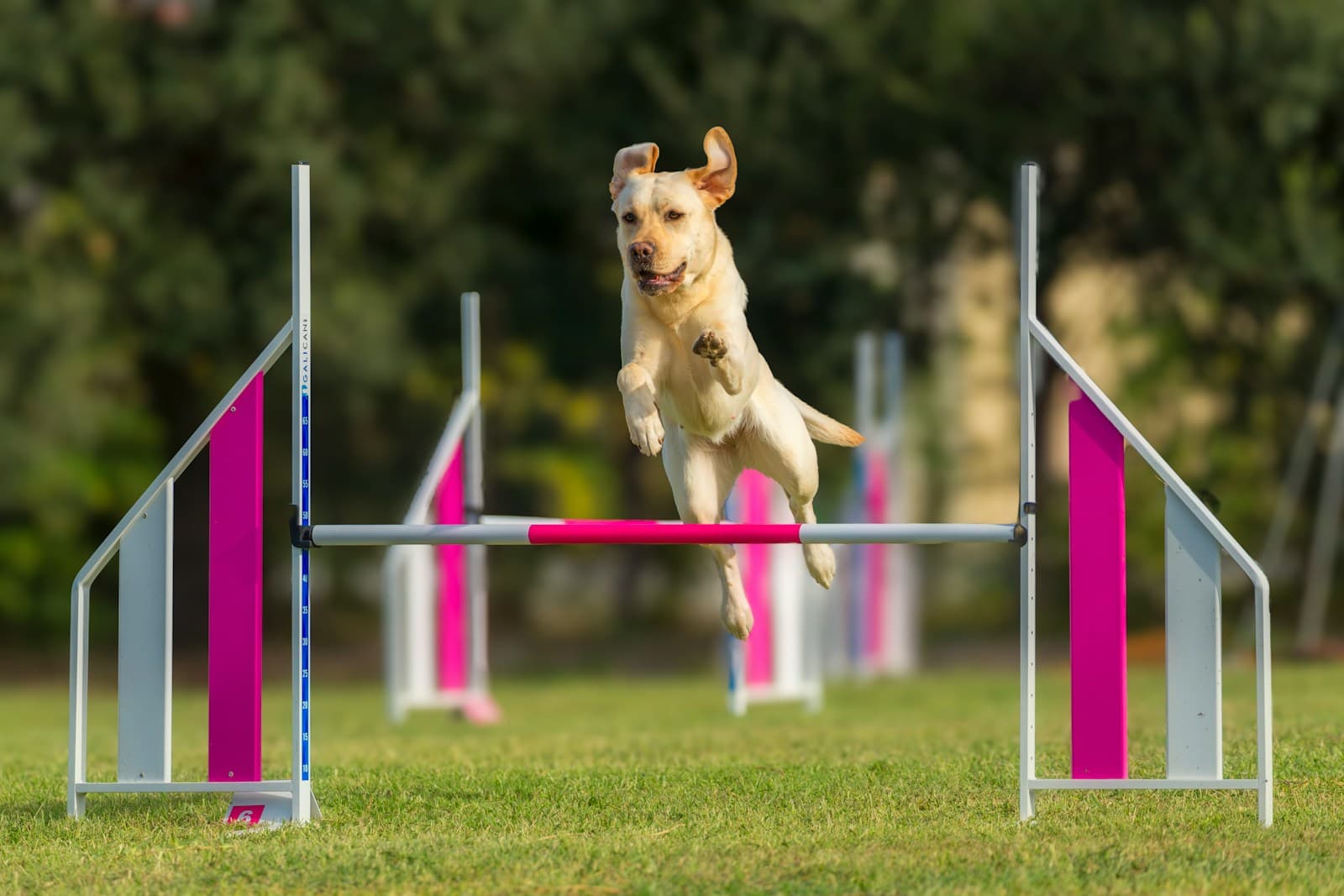
Most of the useful practice in agility happens away from the club, in short sessions at home. You do not need a full course for that. Three pieces of equipment cover nearly everything worth practising in a garden: jumps, a tunnel and weave poles. Everything else is best left to your club.
What's Worth Having
Jumps
Jumps make up most of any agility course, so they are what you will use most. Look for:
- a bar that adjusts in height, so it can start on the ground and rise as your dog matures
- a bar that falls off easily if your dog clips it. A fixed bar turns a clip into a fall.
- a stable, wide base that will not tip on grass
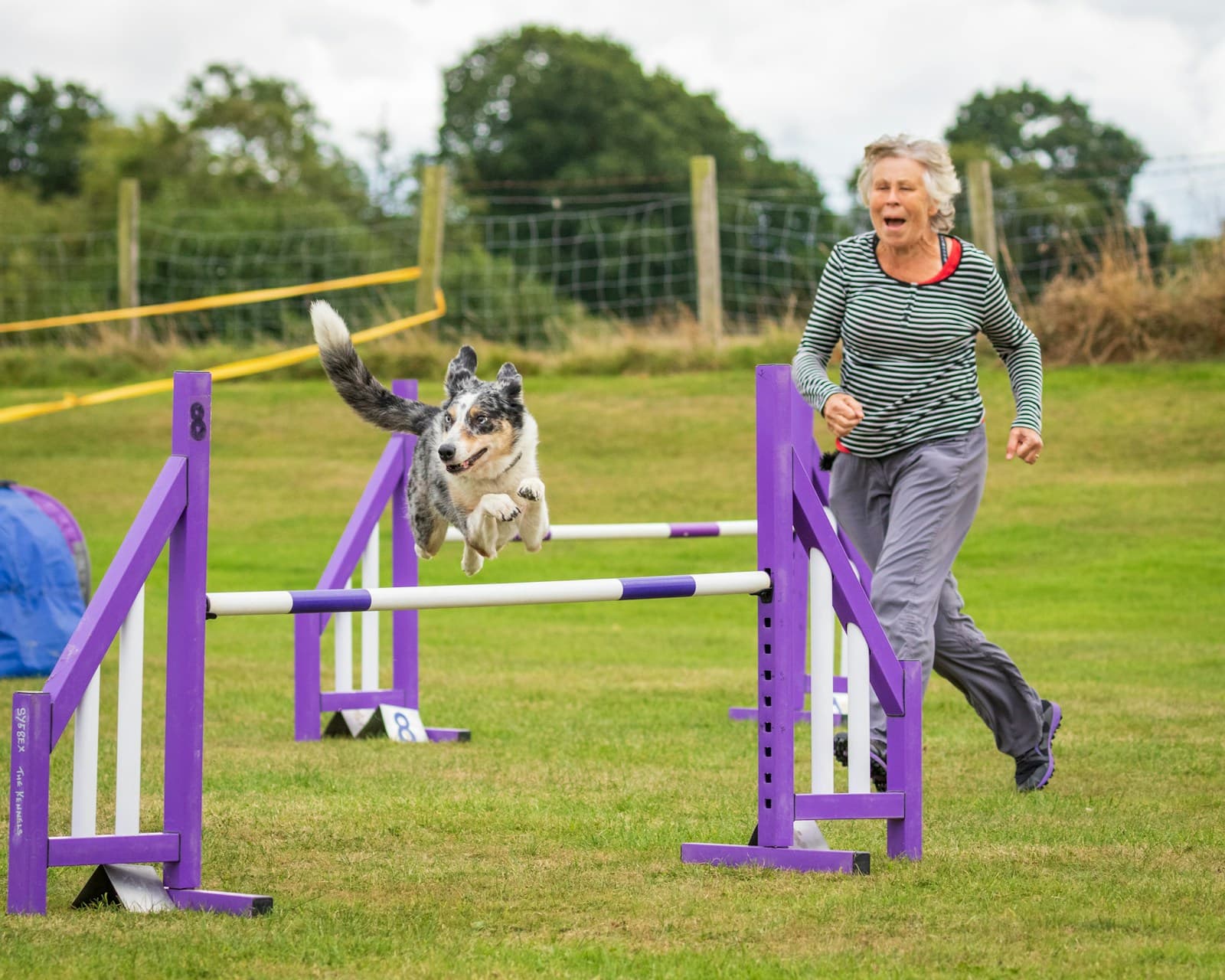
A pair of jumps is far more useful than one, because it lets you practise turns and lines, which is where handling really happens. At shows, jump heights are 300mm, 400mm, 500mm or 600mm depending on the dog's size, but home practice does not need to be at full height.
A tunnel
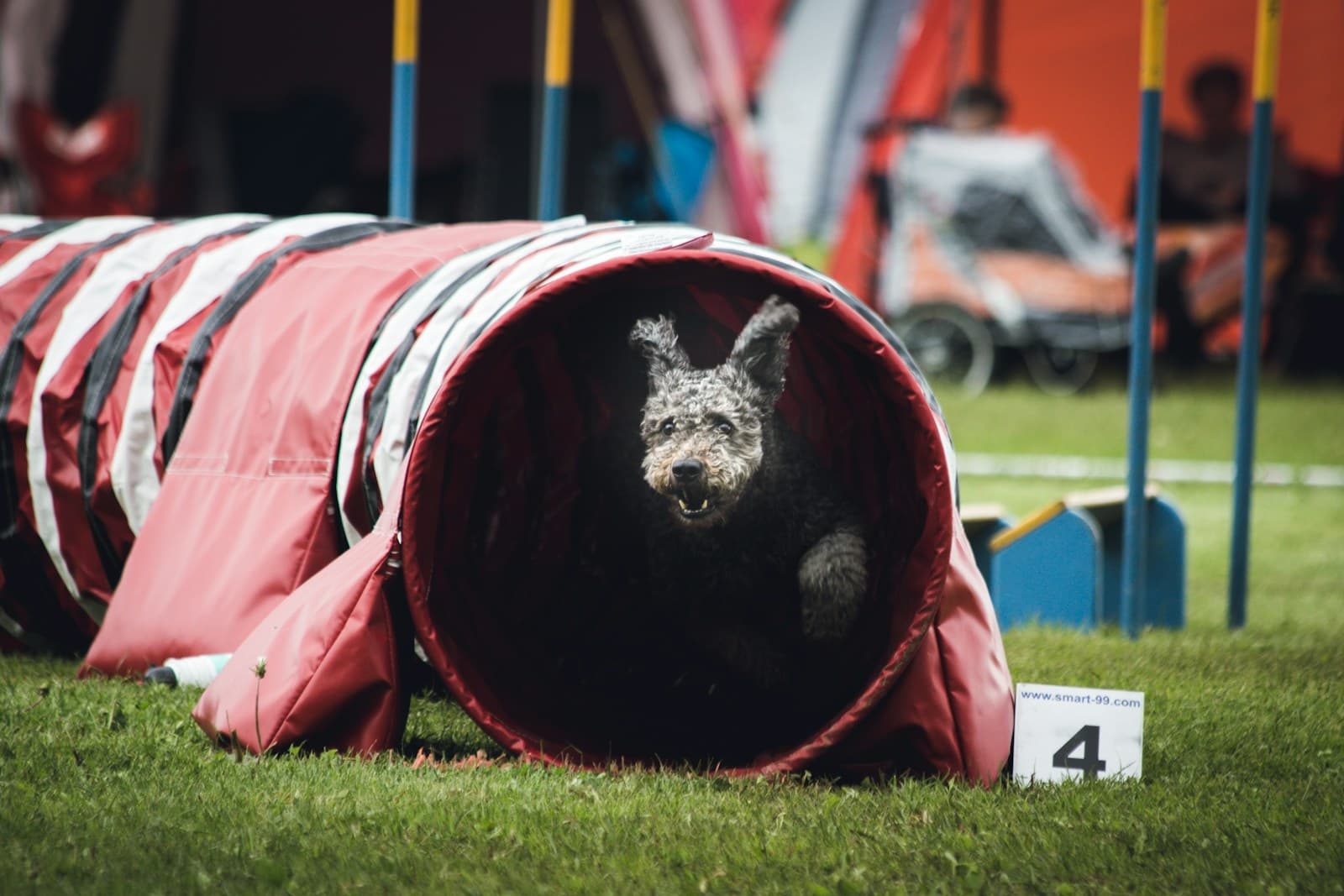
A tunnel is usually the first obstacle a dog falls in love with and the easiest to teach. Show tunnels are at least 600mm across and at least 3 metres long. For home, look for a collapsible fabric tunnel with sandbags or pegs to hold it still, because a tunnel that rolls as the dog enters is a quick way to put it off for good. Start with it straight and short, and curve it once your dog is confident.
Weave poles
Weaving is the hardest obstacle to teach and the one where practice at home makes the biggest difference. At Royal Kennel Club shows, weaves come in sets of six or twelve, with poles 600mm apart and at least 762mm tall. Six poles are plenty to learn on. Look for a base that spikes firmly into grass, and spacing you can adjust.
Weaving bends a dog's spine from side to side at speed, so leave it until your dog is physically mature. It is also easy to teach badly, so start it at a club and use home practice to repeat what your instructor has shown you.
We are planning to stock weave poles, jumps and a tunnel ourselves once the shop opens.
What to Leave to Your Club
The A-frame, dog walk and seesaw are called contact obstacles, because the dog has to touch a painted zone at each end. All three involve height, and the seesaw moves under the dog. A homemade or badly sited one is how dogs get hurt, and a dog frightened by a seesaw that bangs down can take a long time to trust one again. Clubs have properly built, maintained equipment and someone who knows how to introduce it.
Setting Up Safely
- Pick the right surface. Level grass is best. Avoid concrete, paving, decking and anywhere slippery. Do not practise on frozen or waterlogged ground.
- Leave plenty of space. A dog needs room to land after a jump and room to turn. Keep equipment well away from fences, walls, steps and flowerbed edges.
- Check the kit every time. Look for loose fittings, sharp edges, and pegs or spikes that have worked loose.
- Warm up first. A few minutes of walking and gentle trotting before you start, and a cool-down after.
- Keep it short. Five focused minutes is worth more than half an hour. A tired dog lands badly, and agility is high-impact.
- Watch the age. The Royal Kennel Club recommends no work on equipment before a year old, and full-height jumps should wait until your dog's growth plates have closed. Our guide to what age a puppy can start agility explains why.
What to Practise at Home
Home practice is best for the things that need lots of short repetitions:
- sending your dog into a tunnel from a distance
- turns on each side around a single jump
- a straight, confident entry into the weave poles
- waiting at the start line until released
- coming back to you between obstacles
Save full sequences and anything new for your club sessions. If you have not joined one yet, our directory of UK agility clubs lists more than 350 checked clubs, and our beginner's guide covers what to expect.
Sources
- Royal Kennel Club: agility regulations mini guide (2025), equipment specifications
- Royal Kennel Club: new to agility
Equipment sizes checked against the Royal Kennel Club regulations on 6 October 2026.
Common questions
What agility equipment should I buy first?
A tunnel or a pair of adjustable jumps. A tunnel is the easiest obstacle to teach and the one most dogs love first, and jumps are the obstacle that appears most on any course. Weave poles are worth adding once your dog is physically mature and has started learning them at a club.
Can I build an A-frame or seesaw for my garden?
We would not. Contact obstacles involve height, and the seesaw moves under the dog. Badly built or badly sited, they are how dogs get hurt, and a frightening first experience is hard to undo. Leave them to your club.
How far apart should weave poles be?
At Royal Kennel Club shows, weave poles are 600mm apart, in a set of six or twelve, at least 762mm tall. For learning at home, six poles are plenty.
How high should my dog jump at home?
Lower than at a show, and never at full height until your dog's growth plates have closed. Most of the value of home practice is in the handling and turns, not the height, so keep the bars low and the sessions short.
Read next
Hoopers vs Agility: Which Dog Sport Suits Your Dog?
Hoopers swaps agility's jumps and weave poles for hoops, barrels and tunnels, so it is far gentler on joints. How the two sports differ, which dogs and handlers each one suits, and how to find a class in the UK.
How to Start Dog Agility in the UK: A Beginner's Guide
Any dog can try agility, pedigree or not. How to find a club near you, what a first session is like, what it costs, and how you get from your first tunnel to your first Royal Kennel Club show.
How to Calm a Dog During Fireworks: A UK Guide for Bonfire Night 2026
Bonfire Night is a Thursday this year and Diwali is the Sunday after, so many dogs face two late nights in one week. How to prepare, what actually helps on the night, what the evidence says about calming aids, and when to call your vet.