
How to Calm a Dog During Fireworks: A UK Guide for Bonfire Night 2026
Bonfire Night is a Thursday this year and Diwali is the Sunday after, so many dogs face two late nights in one week. How to prepare, what actually helps on the night, what the evidence says about calming aids, and when to call your vet.
Updated 23 September 2026
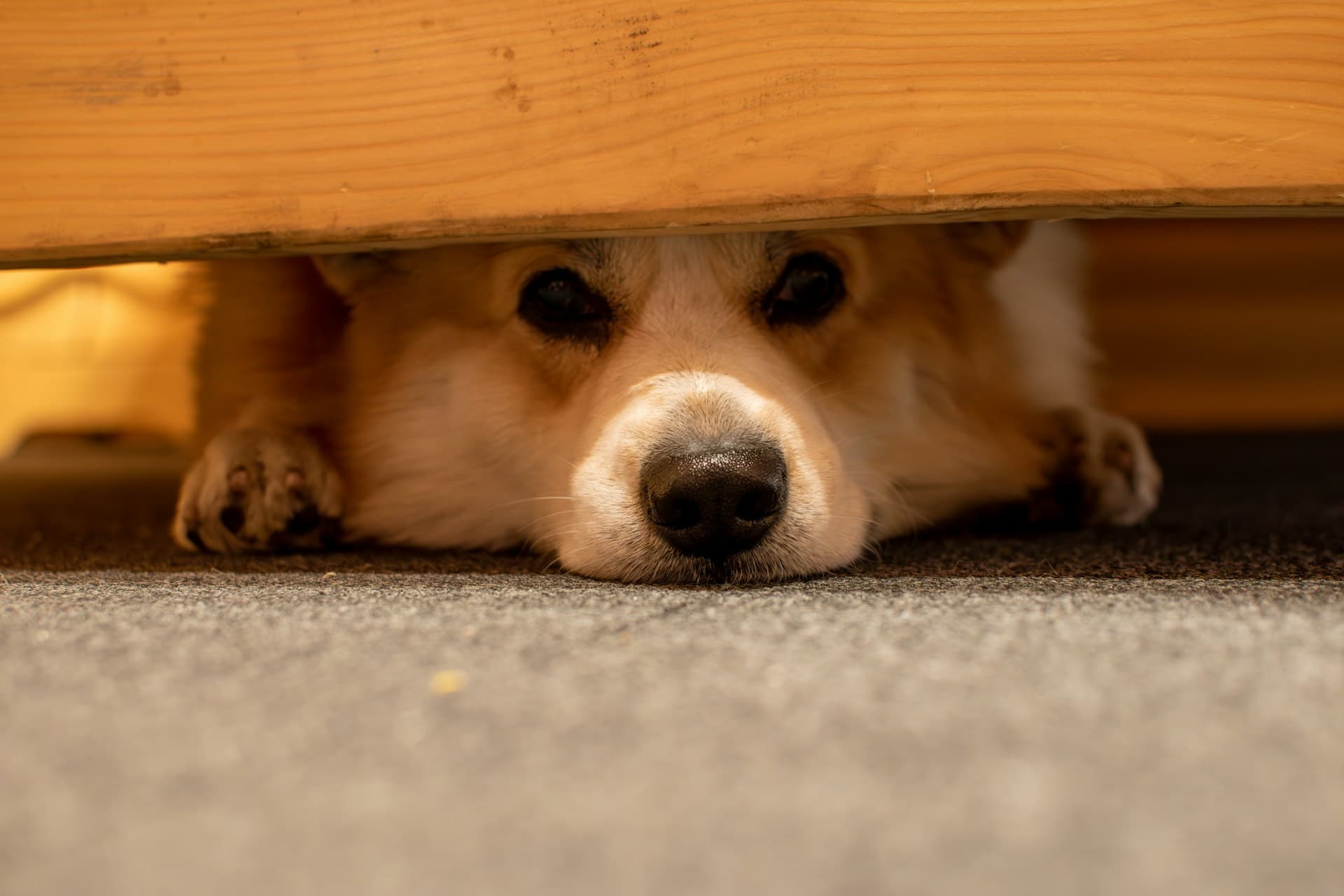
Bonfire Night falls on a Thursday this year, and Diwali is on Sunday 8 November, so in many parts of the UK dogs face two late nights of fireworks in the same week, with the weekend in between likely to be noisy too. If your dog struggles, now is the time to plan, not the afternoon of the fifth.
It is a very common problem. In a 2025 poll for the RSPCA, 60% of dog owners said fireworks affect their dog badly. The good news is that most of what helps is simple, cheap and can be set up in advance.
The Firework Nights to Plan For in 2026
Fireworks can only be sold to the public in the weeks around these dates, and the legal cut-off for setting them off moves later on each one. Organised council and national displays are exempt from the curfew.
| Date | Occasion | Legal cut-off |
|---|---|---|
| Thursday 5 November | Bonfire Night | Midnight |
| Sunday 8 November | Diwali | 1am |
| Thursday 31 December | New Year's Eve | 1am |
| Any other night | 11pm |
Shops without a year-round licence can sell fireworks from 15 October to 10 November and from 26 to 31 December, so expect scattered bangs from mid-October. Halloween often brings the first big ones, and our guide to Halloween dangers for dogs covers the rest of that night. In Scotland fireworks also cannot be set off before 6pm, and some councils have created firework control zones where setting them off in a private garden is illegal. Northern Ireland has its own rules and requires a licence to buy most fireworks.
Two Weeks Before
Book a vet appointment if your dog panics rather than just grumbles. If your dog shakes, pants, tries to escape or cannot settle for hours, talk to your vet now. There are licensed medicines for noise fear in dogs in the UK, and some need to be started a couple of days before the noise. Your vet may also want you to test a dose on a quiet night first, so leaving it to the week itself can be too late.
Build a den. Pick a spot your dog already likes, ideally an inner room away from windows. A crate with a blanket draped over it, or a space behind the sofa or under a table, works well. Pad it with bedding and something that smells of you, and let your dog use it freely in the days before so it is familiar, not something that appears on the night.
Check the microchip details. Every dog in the UK must be microchipped and registered, and the details must be kept up to date. Frightened dogs bolt, and a chip with an old phone number will not get yours home. Check the database now, and make sure their collar tag is current too.
Check the garden. Walk the fence line for gaps and make sure gates latch. A dog that has never tried to escape can clear a fence it would normally ignore.
On the Night
- Walk early. Get the main walk done in daylight, on a lead, so your dog is tired and has been to the toilet before dark.
- Feed a little earlier than usual. Many dogs will not eat once the bangs start.
- Close the curtains and put the lights on. This hides the flashes and makes the house feel ordinary.
- Mask the noise. Put on the TV, music or a radio at a normal volume. Dogs Trust has a free playlist of soft sounds for dogs if you want something designed for it.
- Stay home, and behave normally. A calm person pottering about tells your dog nothing is wrong. Do not leave a nervous dog alone on the big nights.
- Let them choose where to be. If they want to hide in the den, let them, and do not pull them out. If they come to you, comfort them.
- Give them something to do. A stuffed chew toy or a lick mat gives a dog something to focus on, but only if they are calm enough to take it.
- Keep toilet trips short and supervised. Go out with them on a lead, even in the garden, until the fireworks are over for the night.
Comforting Your Dog Does Not Make It Worse
You may have heard that fussing over a scared dog rewards the fear. It does not. Fear is an emotion, not a trick your dog is performing for attention. Dogs Trust says that if your dog seeks reassurance you should give it calmly, and that ignoring them will not help. PDSA gives the same advice.
What Not to Do
- Never punish or shout at a frightened dog, even if they bark, chew something or have an accident indoors. It adds to their fear.
- Do not take your dog to a display, even a dog who seems fine with noise.
- Do not leave your dog tied up outside or in the car, even for a few minutes.
- Do not force them outside during the loudest part of the night.
- Do not give human medicine. Some human sedatives and anxiety drugs are dangerous to dogs.
Signs Your Dog Is Frightened
Some are obvious, like trembling, hiding or trying to escape. Others are easy to miss:
- panting when it is not warm
- pacing and not settling
- lip licking and yawning
- a tucked tail or flattened ears
- whining or barking
- refusing food
- clinginess
- toileting indoors
If your dog shows several of these every year, it is worth treating as a real problem rather than something they will grow out of.
Do Calming Products Work?
This is where a lot of money gets spent, so it helps to know what the evidence says.
Pheromone diffusers and collars release a synthetic copy of a calming scent that nursing dogs produce. A systematic review found moderate evidence that they reduce some fear behaviour around noise, but a later review found the evidence weak. They are harmless, so they can be worth trying, just not as the whole plan.
Anxiety wraps, such as the ThunderShirt, apply gentle pressure around the chest. One study of 90 dogs found lower heart rates in dogs wearing a properly fitted wrap, but overall the evidence is still called inconclusive. Try it on quiet days first so your dog does not link it with the bangs.
Supplements and herbal remedies have the weakest evidence. A 2023 review of treatments for noise fear concluded that most alternative products are unlikely to be enough on their own.
Prescription medicine from your vet has the strongest evidence. For a dog who genuinely panics, it is the kindest option and nothing to feel guilty about.
The Long-Term Fix
The most effective long-term approach is desensitisation and counter-conditioning. You play recordings of firework sounds so quietly that your dog barely notices, pair them with treats or play, and raise the volume very slowly over weeks. Dogs Trust's free Sounds Scary programme gives you the recordings and a step-by-step guide.
It cannot be done in the week before Bonfire Night, and pushing the volume too fast can make things worse. The best time to start is in the quiet months after the season, so your dog is more confident by next autumn. If you have a puppy, gentle exposure to everyday sounds while they are young makes a real difference later.
If You Want the Law to Change
The government is consulting on firework safety until 7 October 2026, including a proposal to cut the maximum noise of consumer fireworks from 120 to 110 decibels. Any changes will not arrive in time for this Bonfire Night, but the consultation is open to the public if you want your view counted.
Sources
- RSPCA: fireworks and pets
- Dogs Trust: fireworks advice and Sound Therapy for Pets
- PDSA: dogs and fireworks
- The Fireworks Regulations 2004, regulation 7 and GOV.UK: fireworks and the law
- Scottish Government: using fireworks and nidirect: fireworks
- GOV.UK: get your dog microchipped
- Riemer (2023), treatment of noise fears in dogs, Animals
- GOV.UK consultation: fireworks and pyrotechnics in the UK
Common questions
Should I comfort my dog during fireworks?
Yes. The idea that comforting a scared dog rewards the fear is a myth. Dogs Trust says that if your dog seeks reassurance you should calmly give it, and that ignoring them will not help. If your dog would rather hide alone, let them.
What time do fireworks have to stop in the UK?
In England, Wales and Scotland the normal cut-off is 11pm. On Bonfire Night it is midnight, and on New Year's Eve, Diwali and Chinese New Year it is 1am. Organised council and national displays are exempt. In Scotland fireworks also cannot be set off before 6pm.
Can I give my dog something to calm them for fireworks?
Only with your vet's advice. There are licensed prescription medicines for noise fear in dogs in the UK, and they work far better than most over-the-counter products. Never give your dog human sedatives or anxiety medication, and book the appointment early so there is time to test a dose before the night.
Do calming collars, diffusers and anxiety wraps work?
The evidence is modest. Pheromone diffusers have some evidence of reducing fear behaviour around noise, and one study found lower heart rates in dogs wearing a properly fitted pressure wrap. Neither is likely to be enough on its own for a very frightened dog. They are worth trying alongside a den, masking noise and, where needed, medication from your vet.
Should I walk my dog when there are fireworks?
Walk them in daylight, before the fireworks start, and keep them on a lead even if they have perfect recall. A dog that bolts at a bang can run a long way. Once it is dark, keep toilet trips short, stay in the garden with them, and make sure the gate is shut.
Can a dog's fear of fireworks be cured?
It can often be reduced a lot with desensitisation and counter-conditioning, which means playing recordings of firework sounds very quietly and pairing them with treats, then raising the volume slowly over weeks. Dogs Trust's free Sounds Scary programme is built for this. Start well away from the season, because it cannot be rushed in the week before.
Read next
A Guide to Boundary Training Your Dog
Discover our comprehensive UK guide on boundary training for dogs, offering step-by-step instructions and tips for success. Learn how to safely teach your dog to respect home boundaries and prevent them from running out the front door, with strategies tailored for puppies and older dogs alike.
The Benefits of Reward-Based Training for Dogs: A Word on Positive Reinforcement
Unlock the secrets of reward-based training and experience the joy of a well-behaved dog through positive reinforcement. Learn how this effective, humane method can strengthen your bond, improve mental health, and encourage good behaviour in dogs of all ages and breeds.
Preparing Your Dog and New Baby for Family Life - The Ultimate Guide
Discover essential tips for UK dog owners on preparing and introducing their dog to a new baby. Learn about obedience training, managing barking, ensuring safe interactions, and addressing common concerns.