
What to Do When Your Dog Eats a Mince Pie: A UK Guide
No, dogs cannot eat mince pies. The raisins, sultanas and currants inside can cause kidney failure, and there is no safe amount. What to do if your dog ate one, symptoms to watch, and when to ring the vet.
Updated 19 October 2026
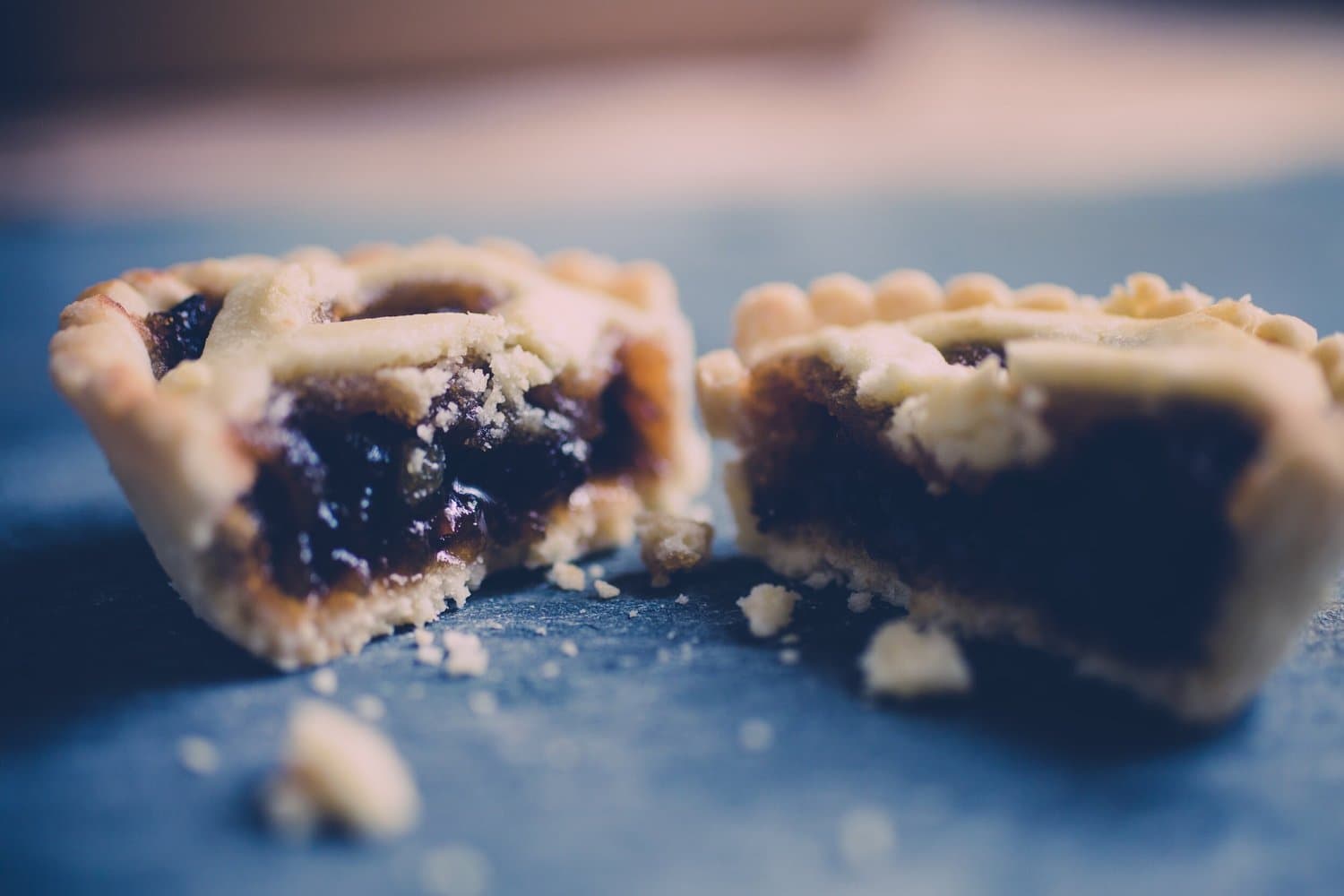
Mince pies are one of the most common reasons dogs end up at the vet over Christmas. In a British Veterinary Association survey, 77% of vets said they had treated a dog for raisin or sultana poisoning in the previous 12 months, up from 69% in 2022. Here is why mince pies are dangerous, what to do if your dog has eaten one, and the symptoms to watch for.
Can Dogs Eat Mince Pies? No, Not Even a Bite
For anyone checking before the pie goes missing: no. Mince pies are one of the few Christmas foods where the answer is a flat no rather than a matter of moderation. The dried fruit inside them (raisins, sultanas and currants) can cause kidney failure in dogs, and the danger does not scale neatly with the amount eaten. Some dogs eat several and get away with it; others become seriously ill from a very small quantity. There is no known safe dose, which is why vets treat every single case seriously.
That includes the “just a bit of pastry” question. Pastry on its own is only a fat and sugar problem, but a pie that has been broken open cannot be trusted. Mincemeat gets everywhere, and a lick of filling is still an unknown quantity of dried fruit. If the honest answer to “did they get any of the filling?” is “maybe”, treat it as a yes and ring your vet.
If symptoms come, they usually start with vomiting within 6 to 12 hours. Damage to the kidneys can take a day or more to show, which is exactly why vets prefer to act before any symptoms appear rather than wait and see.
What Is in a Mince Pie That Harms Dogs
- Raisins, sultanas and currants. The real danger. They can cause kidney failure, even in small amounts, and nobody can predict which dogs will react.
- Alcohol. Many mincemeat recipes include brandy or rum, and homemade mincemeat can contain more than shop-bought.
- Xylitol and chocolate. Some sugar-free mince pies contain xylitol, a sweetener that is dangerous to dogs even in small amounts, and some festive versions contain chocolate.
- Pastry, butter and sugar. Rich, fatty food can upset a dog's stomach and, in some dogs, trigger pancreatitis.
- Spices. Cinnamon and nutmeg in the amounts used in a mince pie are more likely to cause a stomach upset than poisoning, but they add to the problem.
- The foil case. Swallowed foil can cause choking or a blockage.
What to Do If Your Dog Ate a Mince Pie
- Stop them eating more. Move your dog away, clear up what is left, and keep the packaging so you can tell the vet what was in the pies.
- Ring your vet now. Tell them your dog's weight, how many pies they ate and roughly when, and any symptoms so far. If your own vet is closed, ring the out-of-hours number on their answerphone. If you cannot reach a vet, Animal PoisonLine runs a 24-hour paid advice line on 01202 509 000.
- Do not make your dog sick yourself. Never try to induce vomiting at home, and never give salt water, which can cause fatal salt poisoning. Your vet will often make your dog vomit safely at the practice with an injection, and with dried fruit this can still help hours after the pie was eaten. They may also give activated charcoal and put your dog on a drip to protect the kidneys.
- Watch them closely for the symptoms below, even if your vet decides no treatment is needed.
Symptoms to Watch For
- Vomiting, usually the first sign, often within 6 to 12 hours
- Diarrhoea
- Tiredness or weakness
- Loss of appetite
- Tummy pain, such as whining, a hunched back or restlessness
- Drinking or weeing more or less than usual, which can be a sign the kidneys are struggling
If any of these appear after your dog has eaten a mince pie, ring the vet again straight away, even if you were told to monitor at home.
Keeping Mince Pies Away From Dogs
Most mince pie emergencies happen in the busiest part of Christmas, when plates are left on low tables and visitors do not know the rules.
- Keep pies in a closed tin or cupboard, not on a plate on the side. Dogs that never steal from the counter can surprise you.
- Watch the coffee table. It is exactly dog height.
- Tell guests and children not to share anything festive with the dog, however much they beg.
- Check coats and bags that visitors leave on the floor. A box of mince pies in a shopping bag is an easy target.
- Have dog-safe treats to hand, so anyone who wants to give your dog something has an option.
Mince Pies Are Not the Only Christmas Danger
Christmas pudding, Christmas cake and stollen carry exactly the same dried fruit risk, and chocolate, stuffing, turkey bones and fatty leftovers cause plenty of emergencies too. Our guide to Christmas foods dogs can't eat covers the lot, along with what your dog can safely have from the dinner table.
Sources
- Vets Now: can dogs eat mince pies?
- VPIS: grapes and dried fruits and position statement on emesis
- BVA: keep mince pies out of reach of pets
- Animal PoisonLine
Checked on 19 October 2026.
Common questions
What should I do if my dog eats a mince pie?
Ring your vet straight away, even if your dog seems completely fine. Keep the packaging so you can tell them how many pies were eaten and what was in them. Do not try to make your dog sick yourself. Your vet can do that safely at the practice, and with dried fruit it can still help hours later.
Are mince pies dangerous for dogs?
Yes. The raisins, sultanas and currants in mincemeat can cause kidney failure in dogs, and there is no known safe amount. Some recipes also contain brandy or other alcohol, and some festive versions contain chocolate or the sweetener xylitol, which are dangerous too.
What are the symptoms of mince pie poisoning in dogs?
Vomiting is usually the first sign, often within 6 to 12 hours. Diarrhoea, tiredness, loss of appetite, tummy pain and drinking or weeing more or less than usual can follow. Kidney damage can take a day or more to show, so do not wait for symptoms before ringing the vet.
Should I induce vomiting if my dog ate a mince pie?
Not at home. Never try to make your dog sick yourself, and never use salt water, which can cause fatal salt poisoning. Your vet, though, will often make your dog vomit safely at the practice with an injection, and for raisins and currants this can still be worthwhile several hours after the pie was eaten, because dried fruit can sit in the stomach for a long time.
How do I stop my dog eating mince pies at Christmas?
Keep them in a closed tin or cupboard rather than on a plate, never on a low table or coffee table, and tell visitors and children not to share festive food with the dog. Clear plates away promptly, and check bags and coats that guests leave lying about.
Read next
Bought Years Dog Food in a Shop? Where Each Retailer Stands
Years is sold in Pets at Home, Just for Pets and Pets & Friends. For eight days its recall notice spoke only to subscribers. Shop buyers can still return recalled packs for a refund, and can now get Years' free vet support. Here is exactly where you stand.
Years Dog Food Recall: All Fresh Meals Pulled After Reports of Sudden Dry Eye in Dogs
Years recalled its fresh dog meals over a possible buckwheat link to sudden dry eye. Its investigation has now reported. What it found, what it does not settle, and where refunds stand.
Why Do Dogs Eat Grass? What the Research Says, and When to Worry
Most dogs eat grass because they like it, not because they feel ill. What the biggest study found, the signs that change the answer, and the garden plants and chemicals that make grazing risky.